
Corruption 2.0: A Series

The line we are pretending not to see
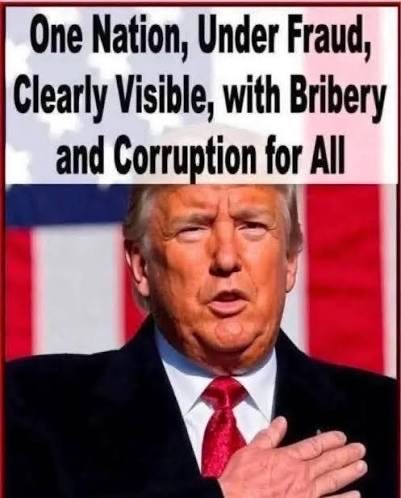
In earlier eras, corruption tried to hide.
It required secrecy. It relied on plausible deniability. It feared exposure.
In ours, it often arrives with a press release.
Trump promotes cryptocurrency while his family members build crypto ventures positioned to benefit from regulatory shifts. His son-in-law, once a senior adviser responsible for sensitive Middle East diplomacy leaves government and soon secures billions from a foreign sovereign wealth fund tied to that same region. Not fishy at all. Enforcement agencies soften their posture toward industries aligned with political allies while cosplaying toughness elsewhere. Private contractors whose excessive revenue depends on aggressive immigration enforcement (caging) thrive as faux crisis rhetoric expands.
Individually, each development can be defended by a savvy snake oil salesman. None, on its own, suspends elections or dissolves Congress but all lend to the “do whatever I want” authoritarianism we are hurtling towards. That is precisely why this moment requires attention and unfortunately it’s not getting it!
Remember: Authoritarian systems rarely begin with dramatic moves. They begin when conflicts of interest stop generating resistance. When personal enrichment of representatives becomes indistinguishable from public policy. When loyalty grows more valuable than law.
The danger is not a single deal or deregulation. Democracies can and have survived isolated corruption. The danger is normalization.
When financial entanglement becomes strategy.
When enforcement becomes selective.
When oversight is dismissed as partisan harassment rather than civic necessity.
Trump did not invent political self interest. He did something more consequential. He operationalized ethical disregard. He tested how much overlap between governance and self-enrichment the system would tolerate and discovered that the tolerance was pretty damn high. Hotels remained active. Branding expanded - he even desired his ridiculous mug on the DOJ building. His family enterprises moved into sectors directly influenced by federal policy. Crypto became both political talking point and a financial gravy train.
In other administrations, that level of entanglement would have triggered bipartisan containment. Somebody would’ve raised a red flag, at least. Instead, it triggered adaptation.
Agencies simply recalibrated to accept it. Party leadership recalculated to absorb it and jump in on it. Supporters rationalized (not that Maga can use logic when it comes to Trump). The few Critics exhausted themselves cataloguing and screaming about it.
What emerged is not a series of scandals. It is a new governing model.
Under this model, financial proximity to power reshapes policy incentives. Regulatory discretion becomes leverage. Patronage networks strengthen. Equal justice under law begins to look less like a principle and more like an aspiration for the unscrupulous!
This two part series is not an argument that the United States has crossed into authoritarian rule yet. It is an argument that we are closer to the line than many Americans are comfortable admitting or acknowledging.
A republic does not collapse because rules are occasionally broken. It weakens when rule bending becomes routine and no longer surprises anyone. When corruption is reframed as savvy, and when the ability to mix power and profit without consequence is treated as evidence of strength rather than cause for alarm, we are in real trouble.
History is unambiguous on one point. The cost of self dealing must remain high for democratic institutions to remain resilient. When that cost drops, when enforcement grows asymmetric, when loyalty shields leaders from meaningful constraint, accountability begins to shift.
We may not feel the shift day to day: gets lost in the headlines and we tune out, but it IS happening. Institutional erosion is rarely cinematic. It is procedural. It is incremental. It is justified in the language of efficiency and economic growth.
And it is most dangerous when it feels normal.
In Part I, we will cover how cryptocurrency misadventures, foreign capital, deregulation, and executive “authority” intersect in ways that test the boundary between public service and private greed.
In Part II, we move from markets to enforcement. We will examine how immigration policy, private detention contracting, and patterns of regulatory asymmetry deepen a system in which loyalty and monetization reinforce each other.
Stay tuned!